

Operational technology environments don’t look the way they did five or ten years ago. There’s more connectivity, more complexity, and more interdependence between systems that were never designed to talk to each other.
There’s also more noise. And the tools most organizations rely on weren’t built for that.
The platforms that defined early OT security, purpose-built around asset visibility and protocol monitoring, solved real problems when they were introduced. But OT environments have evolved faster than the approaches used to defend them. The result is a growing gap between what these platforms were designed to do and what today’s environments actually require.
This isn’t a conversation about OT versus IT. It’s about asking whether the tools you’re running today are matched to the environment you’re defending right now.
What First-Generation Platforms Got Right
Early OT security platforms changed the game. Before they arrived, most OT environments were essentially invisible from a security standpoint. These tools introduced network-based asset discovery, protocol-aware monitoring, and passive visibility into industrial environments that had none before.
That was a meaningful step forward. Those capabilities are still valuable. The problem isn’t that first-generation platforms are broken. It’s that the environment kept moving while the approach stayed largely the same.

Where the Gap Is Growing
Modern OT environments demand more than knowing what assets exist, which protocols are in use, or that an alert was triggered. Those things answer the what, but not the so what.
What’s actually happening? Is this behavior normal for this environment? Does this alert require action right now? First-generation tools often struggle to answer those questions, and that gap shows up in five specific areas.
1. Visibility: From Asset Inventory to Behavioral Context
Asset inventories are useful. They’re also static, and OT environments are anything but.
A contractor connects during a maintenance window. The device communicates briefly, then disappears. A first-generation platform detects it, logs it, and adds it to the asset list. But it can’t tell you what that device communicated with, what actions occurred, or whether anything about the interaction was unusual. That’s the visibility gap that matters today: not presence, but behavior over time.
Modern OT security requires tracking transient activity, preserving context beyond a device’s presence on the network, and understanding interactions rather than just cataloguing existence. In an environment where the speed of attacks is accelerating alongside AI-driven threat capabilities, static inventory can’t carry the load.
2. Protocol Support vs. Protocol Understanding
Protocol support has long been a selling point for OT platforms. But there’s a meaningful difference between recognizing a protocol and understanding how it’s being used.
A controller begins receiving slightly altered command sequences. The traffic is technically valid. Many platforms classify it as normal protocol activity and move on. But validity isn’t the same as safety. Subtle behavioral changes within legitimate protocol traffic are exactly how sophisticated OT attacks operate.
The shift is from parsing to understanding: command-level analysis, behavioral baselining, and detecting deviations in intent rather than just structure. The protocol is the channel. The behavior within it is where the risk lives.
3. Alert Volume and the Real Cost of OT Alert Fatigue
This is where most OT teams feel the limitation most acutely. Many environments generate hundreds of alerts per day, a large percentage of which are tied to normal operational behavior.
The result is a pattern that becomes painfully familiar: alert fires, team investigates, nothing actionable is found, repeat. The problem isn’t detection. It’s context. When platforms don’t account for normal operational patterns or treat every anomaly the same way, they generate noise. And noise isn’t free. It consumes the time and attention of teams that are already stretched thin.
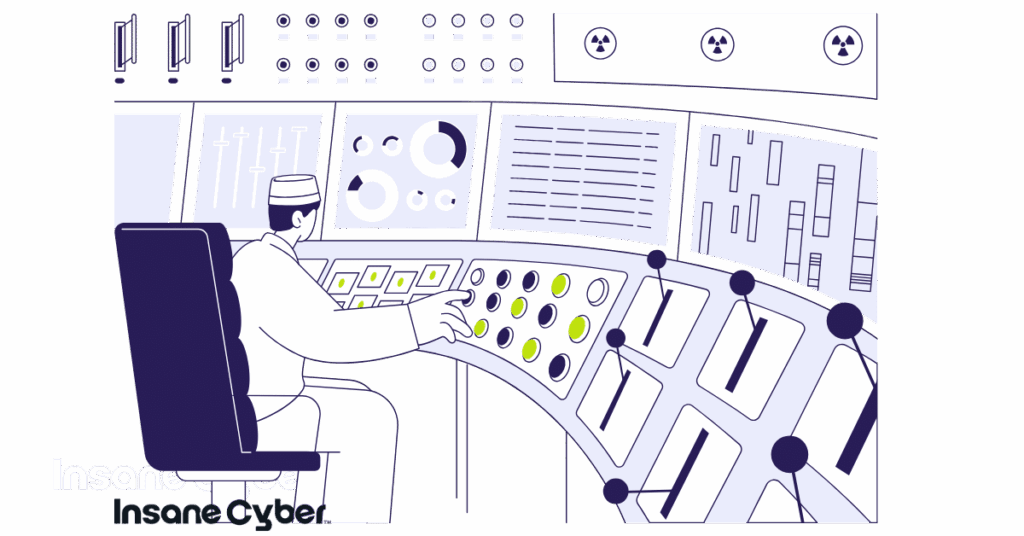
Modern platforms aim to reduce non-actionable alerts, prioritize by operational impact, and surface context upfront so teams can make faster decisions. The goal isn’t a higher alert count. It’s fewer, more meaningful signals.
4. Deployment Reality in Complex OT Environments
OT environments are rarely flexible. They’re segmented, access-restricted, and often air-gapped by design. First-generation platforms accounted for these constraints, but as environments grow more complex, the operational overhead of deploying and maintaining these tools grows with them.
Modern platforms are designed to reduce that friction: adapting to existing architectures, minimizing deployment footprint, and fitting into the environment rather than requiring the environment to reshape itself. Security tools should lower the protection barrier, not raise it.
5. Usability: From Analysis to Action
Many first-generation OT platforms were designed with security analysts in mind. That’s reflected in complex dashboards, high alert volumes, and heavy reliance on manual tuning. But OT teams aren’t primarily analysts. They’re operators who need to understand issues quickly, prioritize effectively, and act with confidence.
There’s also a workforce reality that doesn’t get discussed enough: the number of people who genuinely understand OT security at depth is small, and it isn’t growing fast enough to match the scale of the problem. A platform that requires deep expertise to interpret creates a dependency that most organizations can’t sustainably fill.
Modern OT security is designed around operator clarity: fewer steps between alert and action, context that arrives with the signal rather than requiring additional investigation to uncover.
What Next-Generation Actually Means
This isn’t about adding more features. It’s a shift in philosophy.
| First-Generation OT Platforms | Modern OT Platforms |
| Asset visibility | Operationally aware context |
| Protocol detection | Deep protocol and behavioral understanding |
| High alert volume | Reduced, prioritized alerts |
| Analyst workflows | Operator clarity |
| Monitoring | Actionable insight |
The Bottom Line
First-generation OT security platforms built the category. They were the right tools for the environment that existed when they were designed.
That environment has changed. It’s more dynamic, more complex, and more interconnected than it was. The approaches used to defend it need to reflect that.
The next phase of OT security isn’t about more data. It’s about better context, less noise, and faster understanding. Because in OT environments, the biggest risk isn’t what you can’t see. It’s what you can’t interpret.
| If your current platform is generating more alerts than your team can act on, it may not be a tuning issue. It may be a design limitation. See how Valkyrie and Cygnet approach OT security differently → Find out more. |